



The Application of the Smart Building Concept at The Edge Amsterdam as a Sustainable Office Building
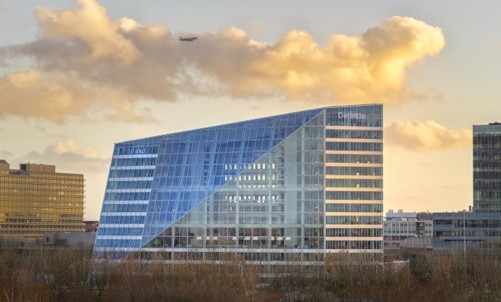
Technological developments have led to the emergence of the smart building concept, namely buildings that utilize digital technologies, such as the Internet of Things (IoT), sensors, and automation systems, to manage various facilities within the building. The goal is to increase energy efficiency, simplify building management, and create a more comfortable and productive work environment. One example of the implementation of a smart building is The Edge in Amsterdam, the Netherlands. Completed in 2014, this building serves as the headquarters of Deloitte Netherlands and has achieved BREEAM certification with a score of around 98%, making it known as one of the most sustainable office buildings in the world. This success was achieved through a combination of energy-efficient building design and the use of smart technology.
 |
The Edge uses Internet of Things technology to connect various systems within the building. Thousands of sensors are installed to monitor room temperature, air quality, lighting levels, and even the number of people in each room. This information is then used to automatically adjust lighting, air conditioning, and energy usage for greater efficiency. Additionally, employees use a smartphone app to reserve desks, meeting rooms, or locate coworkers. The Edge implements an activity-based working concept, so each employee doesn’t have a fixed desk. This system makes space more efficient because the available desks can accommodate more employees.
In terms of design, The Edge utilizes a large atrium that allows natural light to enter the building. This reduces the need for lighting during the day while creating a more comfortable working environment. The LED lights are equipped with sensors so they only turn on when the room is occupied and can adjust the lighting level automatically. The air conditioning system operates based on sensor data, cooling only the rooms currently occupied. This technology helps save energy while maintaining air quality and user comfort while working.
The Edge implements various strategies to reduce its environmental impact. The building uses solar panels as a renewable energy source, an Aquifer Thermal Energy Storage system for heating and cooling, and utilizes rainwater for watering plants and flushing toilets. These various technologies can reduce energy consumption and reduce carbon emissions. The implementation of renewable energy systems such as solar panels and ATES is also part of the green building concept. To function optimally, these systems must be planned in conjunction with the structural design, utilities, and surrounding environmental conditions to support energy efficiency throughout the building’s operational life.
In addition to technology, the choice of building materials also supports sustainability. Research shows that using concrete with additives such as fly ash and blast furnace slag can reduce carbon emissions compared to conventional concrete. This material also helps reduce the use of new raw materials, making it more environmentally friendly. Beyond focusing on energy efficiency, The Edge also prioritizes user comfort. Natural lighting, good air quality, stable room temperatures, and a variety of workspace options create a healthier and more productive work environment. Research shows that implementing smart technology in office buildings can improve both user comfort and well-being.
The Edge Amsterdam is a successful example of the smart building concept in a modern office building. Through the use of IoT technology, smart sensors, automation systems, renewable energy, and more environmentally friendly materials, The Edge is able to improve energy efficiency while providing comfort for its users. This success demonstrates that smart building implementation relies not only on digital technology but also on structural planning, utility systems, and the selection of appropriate construction materials. Therefore, this concept can be a crucial approach to sustainable development in the field of civil engineering.
References
Budak, C., Bulut, C. I., Ibrahim, U. N., & Koliotsas, G. (2020). Design strategies and smart technologies that contribute to well-being in the workplace: The case studies of the Atlas and The Edge in the Netherlands. Research in Urbanism and Architecture, (3-21).
Cambridge Centre for Digital Built Britain. (2018). Case study: The Edge Amsterdam. University of Cambridge.
Catteeu, L., & Maury-Ramirez, A. (2025). Environmental impact of concrete in a green-certified building: The case study of The Edge, the Netherlands. Sustainability, 17(23), 10478.
Jalia, A., Bakker, R., & Ramage, M. (2018). The Edge, Amsterdam: Showcasing an exemplary IoT building. University of Cambridge. https://www.cdbb.cam.ac.uk/news/2018CaseTheEdge
Comments :