



Sustainable Construction Strategies to Support Net-Zero Emissions
The construction industry is one of the sectors that generates significant carbon emissions due to the use of cement, steel, heavy machinery, and high energy consumption in buildings. Therefore, the Net-Zero Emission (NZE) concept is being implemented to reduce the environmental impact of construction activities. This concept focuses on reducing carbon emissions through energy efficiency, the use of renewable energy, and the utilization of more environmentally friendly materials.
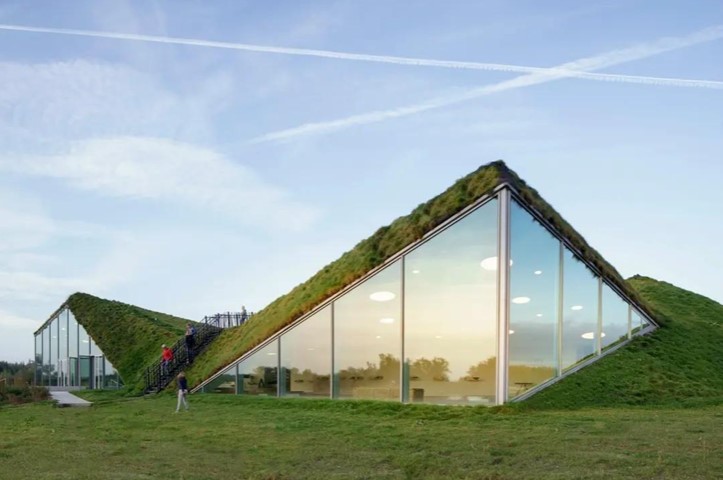 (Source: https://www.architonic.com/en/s/the-growing-advantages-of-green-roofs:-bringing-buildings-to-life/20724379) |
One approach to support low-carbon construction is the use of geopolymer concrete. This material utilizes industrial waste such as fly ash, slag, and rice husk ash as a partial substitute for Portland cement. Using these materials reduces CO₂ emissions while helping to repurpose industrial waste for a more useful purpose. In addition to being more environmentally friendly, geopolymer concrete also offers superior quality, such as high compressive strength, resistance to sulfates and acids, and better durability compared to conventional concrete.
The concept of sustainable development is also supported by the Life Cycle Assessment (LCA) method. This method is used to calculate energy consumption and carbon emissions throughout a building’s entire life cycle, from material production and the construction process to the building’s operational phase and demolition. Analysis results show that the material production stage is the largest contributor to emissions in the construction sector. Therefore, selecting low-emission materials is one of the key steps in reducing a building’s environmental impact.
Additionally, the use of lightweight structural systems is considered more effective in reducing a building’s carbon emissions. Lightweight structural systems result in lower embodied energy and carbon emissions compared to conventional reinforced concrete systems because they require fewer materials and have a high recycling rate. The implementation of material reuse and recycling concepts is a vital component of green construction as it reduces construction waste and the use of new resources.
In addition to material selection, building energy efficiency also plays a major role in achieving Net-Zero Emissions. Low-carbon buildings need to be designed using passive design elements such as natural lighting, natural ventilation, and thermal insulation to reduce energy consumption. The use of energy-efficient active systems such as HVAC and efficient lighting also helps lower a building’s operational energy use.
The use of renewable energy sources, such as solar panels (photovoltaic/PV systems), is also a key strategy for achieving net-zero buildings. Solar panels generate their own electricity, thereby reducing dependence on fossil fuels. The combination of passive design, energy efficiency, and renewable energy is considered the most effective way to create low carbon buildings.
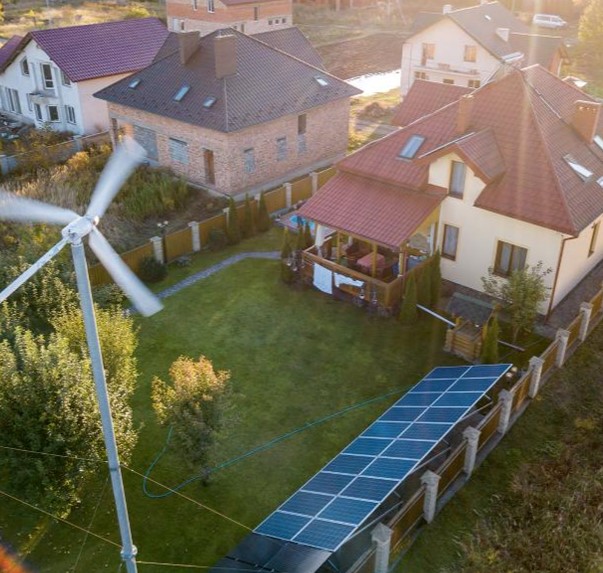
(Source: https://gbcindonesia.org/netzero/greenship?utm_) |
In supporting sustainable construction, Building Information Modeling (BIM) technology also plays a crucial role. This technology can be used to calculate material requirements, perform energy simulations, and analyze carbon emissions as early as the project planning stage. With BIM, project planners can select more efficient and environmentally friendly designs and construction systems.
This concept is further supported by the GREENSHIP certification system from the Green Building Council Indonesia (GBCI). GREENSHIP is a green building standard that evaluates energy efficiency, the use of environmentally friendly materials, water conservation, and the building’s environmental quality. The system emphasizes that the primary step toward low-carbon buildings is to first reduce energy consumption, and then meet energy needs using renewable energy sources.
Overall, the use of eco-friendly materials, the application of Life Cycle Assessment (LCA), the use of Building Information Modeling (BIM), energy efficiency, and the use of renewable energy are key strategies for supporting sustainable construction on the path to netzero emissions. By implementing these strategies, the construction sector can reduce carbon emissions while creating buildings that are more efficient, durable, and environmentally friendly.
References
Li, S., Widen, J., Shadram, F. (2025). Towards realizing life cycle net-zero energy/emissions (LCNZE) building: A systematic literature review. Journal of Building Engineering, (226).
Abouhamad, M., & Abu-Hamd, M. (2021). Life Cycle Assessment Framework for Embodied Environmental Impacts of Building Construction Systems. Sustainability, 13(2), 461. Rangan, B. V. (2014). Geopolymer Concrete for Environmental Protection. The Indian Concrete Journal, 88(4), 41–59.
Green Building Council Indonesia (GBCI). GREENSHIP Net Zero. https://gbcindonesia.org/netzero/greenship?utm_ Kementerian Pariwisata dan Ekonomi Kreatif Republik Indonesia. GREENSHIP: Dari Klaim ke Standar yang Terukur.
Comments :